
BHS00222
·
Person
·
1922 - 1999
BHS0033
·
Corporate body
·
1845 -
Knox Presbyterian Church in Burlington, Ontario was established in 1845 as Knox Presbyterian Church, Wellington Square. It wasn't until 1873 that the name of the town was changed to Burlington. Land was donated for a new church by Andrew and Martha Gage, and a small log building was constructed in the summer of 1845. The church was governed by a united Session with Knox Presbyterian Church in Waterdown, until 1877. In that year, a new church building was constructed as well. In 1925, the congregation voted to remain with The Presbyterian Church in Canada.
AGOAC00542
·
Person
·
1903 -1996
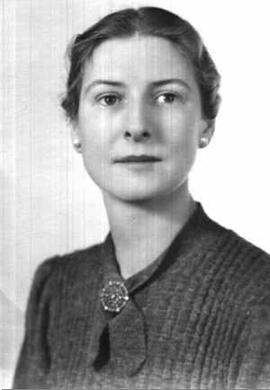
Mary Augusta Stewart Houston Bagnani (1903–1996), known after marriage as Stewart Bagnani, was an administrator at the Art Gallery of Toronto (now the Art Gallery of Ontario) and a lecturer in fine art. Born in Toronto of a distinguished family, she was the daughter of Stewart Fielde Houston (1868–1910), manager of Massey Hall in Toronto and first editor of The Financial Post. Her mother was Augusta Louise Beverley (Robinson) Houston (1859–1935), daughter of Mary Jane (Hagerman) Robinson (1823– 1892) and John Beverley Robinson (1821–1896), mayor of Toronto (1856), member of Parliament in Ottawa (1872–1880) and Lieutenant-Governor of Ontario (1880–1887). Augusta Robinson was one of five children: John Beverley, Napier, Christopher, Minnie Caroline (d. 1923; from 1881 Mrs William Forsyth Grant) and Augusta herself (from 1898, Mrs Stewart Fielde Houston). Stewart Bagnani’s greatgrandfather was Sir John Beverley Robinson (1791–1863), Chief Justice of Canada West (now Ontario) from 1829 to 1862. (Mary Augusta) Stewart Houston attended school in England and in Toronto (Bishop Strachan School), and later studied art history in Rome, where she met Gilbert Bagnani.
After her marriage to Dr Bagnani in Toronto in 1929, Stewart Bagnani worked beside her husband in the excavations at Tebtunis entrusted to the Royal Italian Archaeological Expedition in Egypt of which Dr Bagnani was director. On site, she drew and painted watercolours (now at Trent University) of early Coptic church frescoes, and recorded observations of excavation workers and of local customs to accompany Dr Bagnani’s photographs. When Gilbert and Stewart Bagnani moved to Canada in 1937, they worked at enlarging the farmhouse on their estate Vogrie to accommodate collections of books and works of art. In the 1950s, a mural was commissioned for a room in the house from Canadian artist William Ronald (1926–1998) of the Painters Eleven. In 1951, while her husband was teaching at the University of Toronto, Mrs Bagnani became head of Extension at the Art Gallery of Toronto, a position she held until 1963. When Dr Bagnani accepted a post at Trent University in Peterborough, Ont. in 1965, Mrs Bagnani gave lectures there on fine art, worked on promoting the Mackenzie Gallery at the university and volunteered at Kingston (Ont.) Penitentiary. A pamphlet and transcripts of two lectures by Stewart Bagnani are in the library collection of the AGO.
After her husband died in 1985, Stewart Bagnani lived in Toronto until her death in 1996 at the age of 93. She was buried with her husband Gilbert in Cobourg (Ont.).

S091
·
Corporate body
·
1947 -
The Canadian Water Resources Association is a national organization of individuals and organizations interested in the management of Canada's water resources. It has branch organizations in most provinces and territories. CWRA history can be traced back to 1947 when the first meeting was held in Alberta as the Western Canada Reclamation Association. CWRA exists to stimulate public awareness and understanding of Canada's water resources, to encourage public recognition of the high priority of water as a valued resource, to provide a forum for the exchange of information and opinion relating to the management of Canada's water resources, and to participate with appropriate agencies in international water resource activities
AC00345
·
Person
·
1899 - 1975
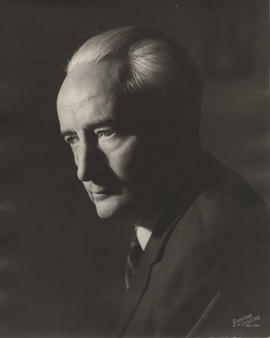
Gotthard Booth (1899-1975) was a medical doctor specializing in the practice of psychiatry concerned with chronic physical diseases, psychosomatic medicine, and studies in the relationship between religion and health. Born in Nuremberg, Germany, Booth graduated from the University of Munich Medical School in 1923, and in the early 1930s moved to the United States. He resided in Westport, Connecticut but maintained a practice in New York City. Booth taught at Columbia University from 1945 to 1953, was instructor for one year at the New York Medical College, and from 1962 was consulting psychiatrist for the Union Theological Seminary, New York. In 1965 he became a visiting lecturer at Waterloo Lutheran University (now Wilfrid Laurier University) and its federated college, Waterloo Lutheran Seminary. A fellow of the American Psychiatric Association, Booth's research resulted in the publication of more than 60 articles. He worked as a research associate with the New York Psychiatric Institute for ten years. He was also a member of the American Psychosomatic Society, the Academy of Psychosomatic Medicine, the New York County Medical Society, and the American Medical Association.
Person
S086
·
Corporate body
·
1946 - 1996
Personal Studio was founded by Robert T.G. Nicol and a friend, and officially opened for business on March 21, 1946. Nicol was the sole photographer and owner by the fall of 1946. For the next fifty years Robert Nicol documented the Waterloo Region through personal and commercial photography. He pioneered the concept of wedding albums in the local area. He had started flying in 1961 and from that time on took aerial photographs as well as studio and candid photography. In the course of his career he maintained memberships in professional photographers' organizations as well as completing continuing photographic educational courses offered by those organizations. He retired as a professional photographer in 1996.
044
·
Person
·
1897-1972
Harley Anson Misener (1897-1972) was a genealogist in Ontario, researching the Misener family. Harley Misener was the seventh generation of Miseners whose first ancestors, Richard Misener and his wife Elizabeth, emigrated with their family from the Palatinate district of Germany to North America in 1720 and settled in New Jersey.
AC04590
·
Person
·
1947 -
John Jackson (1947 - ) is an environmental activist in Ontario, Canada. Jackson received his BA from the University of Waterloo in 1969. He is a researcher, project director, advisor, chair and coordinator of numerous environmental agencies. Jackson served as President of the Ontario Toxic Waste Research Coalition, a citizens' and agricultural group which succeeded in halting the Ontario Waste Management Corporation's plans to build a hazardous waste plant in West Lincoln in the Niagara Peninsula. In recognition of his leadership, John Jackson was presented a scroll by the Member of Provincial Parliament for the Riding of Lincoln.
092
·
Corporate body
·
1955 -
The Great Lakes Fishery Commission was established in 1955 by the Canadian/U.S. Convention on Great Lakes Fisheries. The commission coordinates fisheries research, controls the sea lamprey, and facilitates cooperative fishery management among the state, provincial, tribal, and federal management agencies.